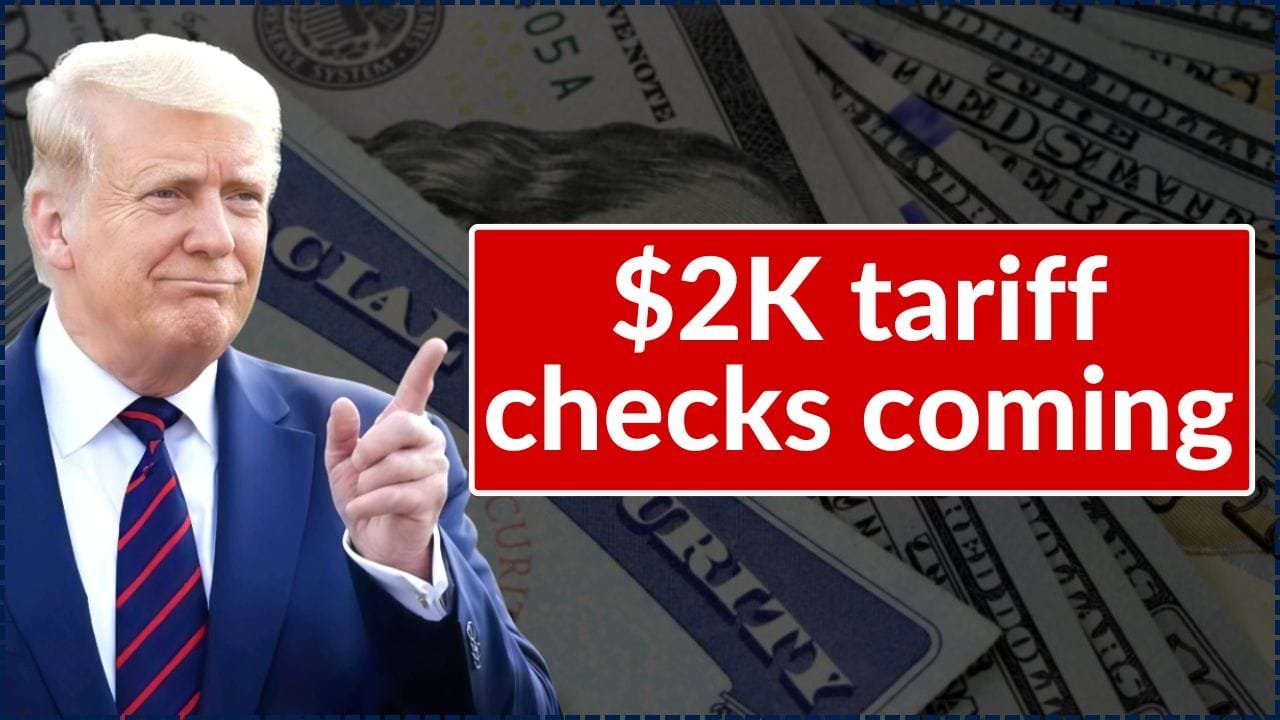


Claims circulating online about a $2,000 stimulus payment arriving by direct deposit before Christmas 2025 are not supported by any enacted federal policy, according to U.S. government officials and independent analysts. As of mid-December, Congress has not passed legislation authorizing new stimulus checks, and the Internal Revenue Service has issued no payment guidance.
Table of Contents
Stimulus Payments Before Christmas 2025
| Key Fact | Detail |
|---|---|
| Federal $2,000 stimulus approved? | No legislation has been passed authorizing new stimulus payments |
| IRS direct deposit date set? | No payment schedule has been announced |
| Reason claims are spreading | Viral posts and speculative policy discussions |
| State payments involved? | Some states issue rebates or dividends, but these are not federal stimulus checks |
| Scam risk | High — IRS warns against unsolicited payment messages |
Absent congressional action, federal officials say claims of a nationwide $2,000 stimulus payment before Christmas 2025 are inaccurate. Any legitimate update, they stress, would be announced publicly and widely covered by major news organizations.
What Is Fueling the $2,000 Stimulus Payment Claims
The resurgence of interest in a $2,000 stimulus payment can be traced to a familiar pattern seen during past periods of economic strain. Viral headlines, content aggregation websites, and short-form social media posts have amplified speculative policy discussions, often stripping them of necessary context.
Many claims cite unnamed government officials or reference vague “economic relief plans” without linking to legislation, official statements, or credible reporting. Others recycle outdated information from pandemic-era stimulus programs, presenting it as new or imminent.
In several cases, articles reference theoretical proposals—such as redistributing tariff revenue or issuing “dividend-style” payments—but omit the fact that these ideas have not been introduced as bills. Economists note that policy discussion alone does not translate into action.
Federal agencies, including the Internal Revenue Service and the U.S. Department of the Treasury, have confirmed they are not preparing to distribute new payments.
“Any direct payment program would require clear statutory authority,” a Treasury official said in a statement. “That authority does not exist at this time.”
Congressional Action Required for Any New Stimulus
Under U.S. law, stimulus payments cannot be issued without congressional approval. Both the House of Representatives and the Senate must pass authorizing legislation, followed by the president’s signature.
As of now, no bill proposing a $2,000 stimulus payment has advanced through committee hearings or been scheduled for debate. Congressional budget documents and public calendars show no movement toward universal direct payments in late 2025.
While lawmakers across party lines acknowledge concerns about household affordability, most current policy efforts focus on targeted tax relief, regulatory changes, or deficit reduction rather than broad cash transfers.
“Direct payments are among the most visible tools Congress can use, but they are also among the most expensive,” said Maya MacGuineas, president of the Committee for a Responsible Federal Budget. “There is no indication lawmakers are preparing to authorize them right now.”
Why December 2025 Payments Are Unlikely
Even if Congress were to act, administrative timelines make December distribution highly improbable.
The IRS must develop eligibility rules, update payment systems, and issue public guidance before sending any funds. That process typically takes weeks or months, even under emergency conditions.

During the COVID-19 pandemic, payments were distributed rapidly by historical standards, yet still required extensive coordination and public notice.
“There would be clear signals long before any deposit appeared,” said Howard Gleckman of the Urban-Brookings Tax Policy Center. “The absence of those signals is telling.”
Historical Context: How Past Stimulus Programs Worked
Previous federal stimulus programs followed a transparent and well-documented process. Between 2020 and 2021, Congress authorized three rounds of economic impact payments, each accompanied by:
- Formal legislative approval
- Public IRS guidance
- Dedicated online tracking tools
- Extensive media coverage
Those programs were designed to address acute economic emergencies. Analysts note that current economic conditions, while challenging for many households, differ significantly from the pandemic-era shutdowns that prompted earlier stimulus efforts.
The lack of emergency declarations or bipartisan consensus further reduces the likelihood of sudden payments.
State Payments Are Adding to the Confusion
Another driver of confusion is the existence of legitimate state-level payments. Some states periodically distribute tax rebates, surplus refunds, or dividends based on revenue performance.

These payments vary widely in amount and eligibility and are not administered by the federal government. Policy experts stress that state programs should not be mistaken for nationwide stimulus checks.
IRS Warns Public to Watch for Scams
The IRS has warned that false stimulus rumors often coincide with an increase in fraud attempts. Scammers commonly impersonate government agencies, urging recipients to “verify” banking details or claim payments.
The agency reiterates that it does not initiate contact through text messages, emails, or social media.
Consumer protection groups advise taxpayers to verify claims through official IRS channels or established news organizations.
What Would Need to Happen Next
For a $2,000 stimulus payment to occur, several steps would need to happen in sequence:
- A bill introduced and debated in Congress
- Passage by both chambers
- Presidential approval
- IRS implementation and public guidance
None of these steps have occurred. Analysts say Congress is currently focused on budget negotiations and fiscal oversight rather than direct cash payments.
Public Reaction and Media Responsibility
The spread of unverified claims has renewed scrutiny of online publishing practices. Journalism ethics experts emphasize that financial misinformation can cause real harm by influencing household decisions.
“People budget around this information,” said Kelly McBride of the Craig Newmark Center for Ethics and Leadership. “Accuracy isn’t optional—it’s essential.”
FAQ
Is there a confirmed $2,000 stimulus payment for Christmas 2025?
No. There is no approved federal stimulus program authorizing such a payment.
Has the IRS announced a direct deposit date?
No. The IRS has released no payment schedule.
Are any Americans receiving payments right now?
Some states are issuing rebates or dividends, but these are not federal stimulus checks.
Could a stimulus payment still happen in 2026?
Only if Congress passes new legislation.