
An online brain teaser known as This Optical Illusion Is Driving People Crazy has rapidly spread across social media, challenging viewers to identify the numbers 15 and 31 hidden among repeated 51s. The viral puzzle, shared widely in recent weeks, has drawn millions of views and sparked debate, frustration, and fascination, while offering a real-world demonstration of how human visual perception and attention work under pressure.
Table of Contents
Optical Illusion Is Driving People Crazy
| Key Fact | Detail |
|---|---|
| Viral reach | Shared by major news sites and social platforms |
| Challenge | Find 15 and 31 hidden among 51s |
| Science behind it | Visual perception and cognitive bias |
| Time pressure | Often limited to 5–10 seconds |
What Is Behind the Viral Puzzle?
At its core, This Optical Illusion Is Driving People Crazy relies on repetition, visual similarity, and expectation. The image displays a dense grid of the number 51, printed in identical font, size, and color. Embedded within that grid are two anomalies: the numbers 15 and 31, subtly reversed but visually similar.
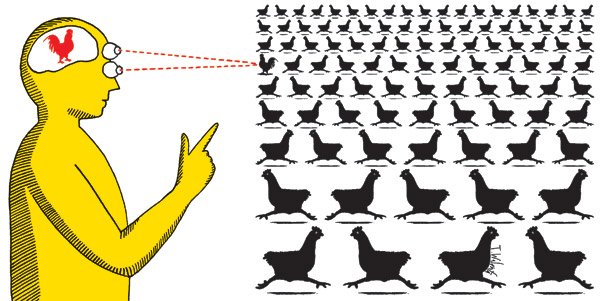
Because the digits share the same shapes, the brain quickly categorizes the entire grid as uniform. Once that categorization occurs, the visual system deprioritizes further detailed inspection, making the hidden numbers difficult to detect.
“This type of illusion exploits the brain’s need for efficiency,” explained Dr. Jeremy Wolfe, a professor of ophthalmology and visual science at Harvard Medical School, whose work focuses on visual search and attention. “When objects look similar, the brain assumes they are identical unless forced to reconsider.”
Why the Brain Struggles to See the Hidden Numbers
Pattern Recognition and Perceptual Set
The difficulty of This Optical Illusion Is Driving People Crazy lies in a phenomenon known as “perceptual set.” This occurs when the brain forms an expectation based on prior information and unconsciously filters out data that contradicts it.
Once viewers register that the grid contains “51,” the brain reinforces that conclusion, even when evidence suggests otherwise. The reversed numbers technically remain visible, but attention fails to register them as meaningful differences.
According to the American Psychological Association, perceptual set plays a critical role in everyday decision-making, from reading text to recognizing faces.
Inattentional Blindness
Another factor is inattentional blindness, a well-documented cognitive limitation where individuals fail to notice unexpected stimuli when focused on a specific task.
Classic experiments, including those published in peer-reviewed psychology journals, show that people can miss even prominent changes when attention is constrained. In the case of this illusion, the constraint is both visual repetition and time pressure.
The Role of Time Pressure in Viral Illusions
Many versions of This Optical Illusion Is Driving People Crazy include a countdown, asking viewers to solve the puzzle in five or ten seconds. Researchers say this dramatically increases the illusion’s difficulty.
Time pressure forces the brain to rely on heuristics, or mental shortcuts, instead of careful analysis. Studies in cognitive psychology consistently show that rapid decision-making reduces accuracy in visual discrimination tasks.
“Speed amplifies bias,” said Dr. Anne Treisman, whose feature integration theory remains influential in vision science. “When time is limited, the brain defaults to what it expects to see.”
This explains why some viewers insist the hidden numbers do not exist, even after being shown the solution.
Why Optical Illusions Spread So Quickly Online
The popularity of This Optical Illusion Is Driving People Crazy reflects broader trends in digital media consumption. Interactive content consistently outperforms static posts, according to data from the Pew Research Center.
Optical illusions encourage participation, comparison, and emotional reaction. Viewers are compelled to test themselves, share results, and challenge others, creating a feedback loop that boosts visibility.
Social media algorithms further amplify this effect by prioritizing posts that generate comments, debate, and repeated engagement.
A Brief History of Optical Illusions
While This Optical Illusion Is Driving People Crazy feels distinctly modern, optical illusions have a long history in science and art.
Ancient Greek philosophers, including Aristotle, wrote about visual misperception. In the 19th century, scientists began formally studying illusions to understand how vision works. Famous examples such as the Müller-Lyer illusion and Rubin’s vase helped establish foundational principles of perception.
Modern digital illusions follow the same principles but benefit from rapid online distribution and simplified design.
Are Optical Illusions Measures of Intelligence?
Psychologists strongly caution against interpreting results from This Optical Illusion Is Driving People Crazy as indicators of intelligence, eyesight quality, or cognitive ability.
Performance varies based on screen size, brightness, font rendering, fatigue, and prior exposure to similar puzzles. Even highly trained visual experts can miss anomalies under certain conditions.
“These puzzles test perception in a specific moment, not general intelligence,” according to guidance from the British Psychological Society. “They reveal how attention operates, not how capable a person is.”
Cultural and Global Appeal of Visual Puzzles
One reason This Optical Illusion Is Driving People Crazy resonates globally is that it does not rely on language, cultural knowledge, or education level. Numbers and visual patterns are universally recognizable.
Researchers studying cross-cultural cognition note that optical illusions produce similar effects across populations, suggesting shared neurological mechanisms in human vision.
This universality makes such puzzles particularly attractive to international news outlets and global social platforms.
Educational Value Beyond Entertainment
Beyond entertainment, This Optical Illusion Is Driving People Crazy offers educational value. Teachers and psychologists often use similar illusions to explain how perception differs from reality.
Medical professionals studying vision disorders also rely on illusion-based testing to identify how the brain processes visual input.
Some experts argue that viral illusions could serve as informal science communication tools, helping the public better understand cognitive limitations.
Ethical Considerations and Misinformation Risks
While largely harmless, viral puzzles can sometimes fuel misinformation when exaggerated claims are attached, such as assertions that only “geniuses” can solve them.
Experts stress the importance of responsible framing by publishers and influencers. Misrepresenting these illusions as intelligence tests can reinforce false beliefs and unnecessary anxiety.
Major news organizations typically contextualize such puzzles with expert commentary, reducing the risk of misleading interpretations.
What Comes Next
As short-form interactive content continues to dominate digital platforms, researchers expect puzzles like This Optical Illusion Is Driving People Crazy to remain widespread. Advances in display technology and generative design may make future illusions even more sophisticated.
For scientists, the continued popularity offers insight into public curiosity about the mind. For audiences, it provides a reminder that seeing is not always believing.
“Optical illusions expose the mechanics of perception,” Wolfe said. “They show us that the brain is powerful, but not infallible.”
FAQ
What makes this optical illusion difficult?
The repeated pattern conditions the brain to assume uniformity, causing it to overlook subtle differences.
Does failing the illusion mean poor eyesight?
No. Visual perception depends on attention, expectation, and context rather than visual sharpness alone.
Why do people argue about the solution?
Once expectations are set, contradictory information is harder to accept, leading to disagreement.
Can practice improve performance on these puzzles?
Familiarity can help, but it does not eliminate perceptual limitations.